Author Archives: Taylor Soule

Why I like diagramming sentences

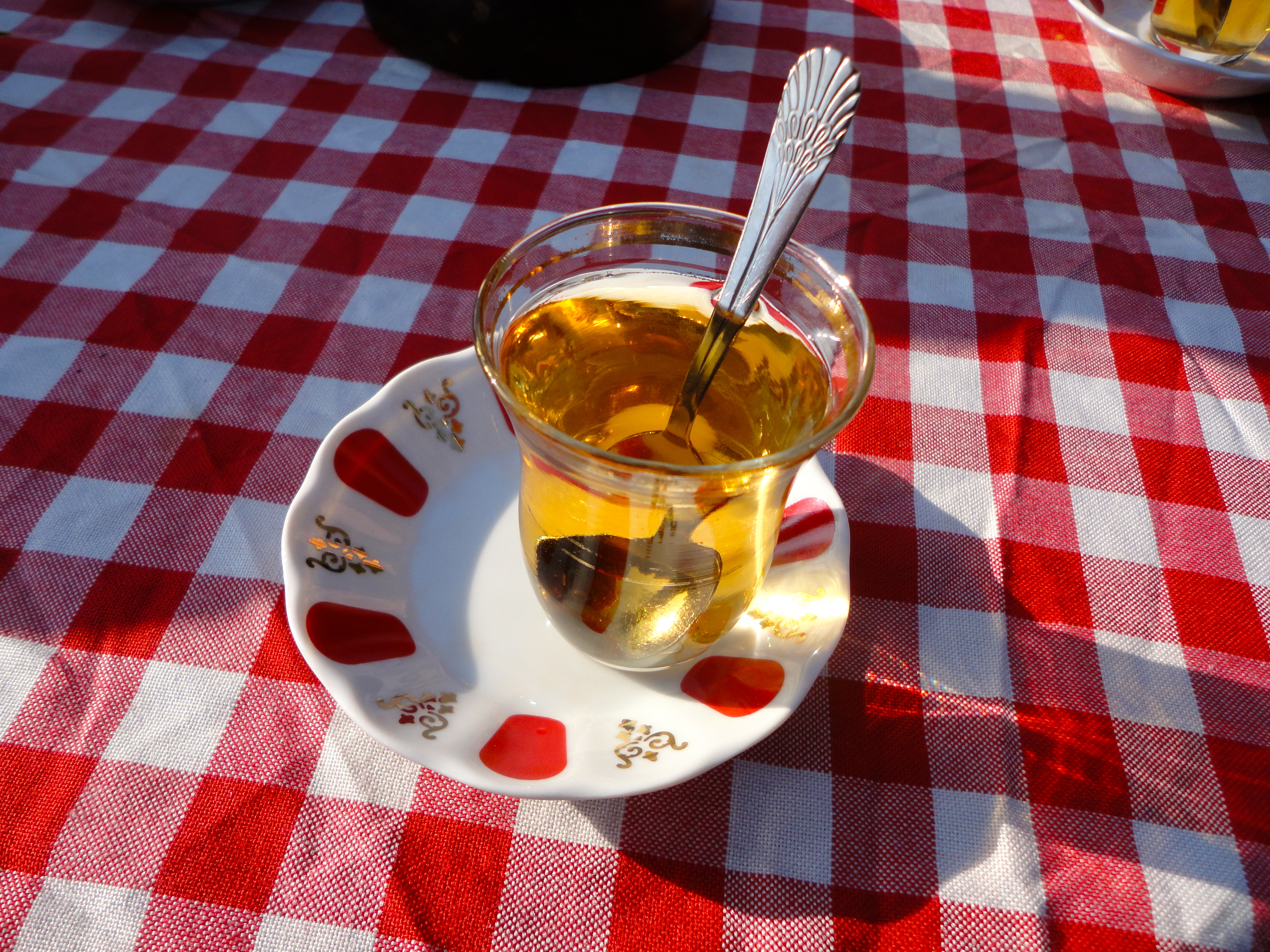
Errant droplets of tea create a path in my apartment, clinging to the lip of my favorite owl mug until they fall. When I can’t make sense of my life, I pour a mug of tea and pace.

Sometimes as I pace, I find myself trying to strip pivotal conversations of their emotional value; break them down into something formulaic, impersonal. An unexpected application of my English degree.

A few days ago I found myself dwelling on the end of a relationship, rereading old text messages as I admit I’m prone to do. Rather than succumb to the usual, toxic practice of pinpointing specific places I could have been funnier/wittier/smarter/etc., I began diagramming and labeling the verbs in my mind. Intransitive, monotransitive, ditransitive, copula, complex transitive. I plotted the form of each sentence, using colored text, italics and returns to reimagine my pain as a pattern, one I can plot, map and organize.

The terminology I once feared has become not an academic tool, a means of getting an A on the next essay, but a means for visualizing disappointment — proof that my pain exists in tangible, color-codable clarity.

I’m no longer worried about how I could have been funnier/wittier/smarter/etc. I was and am a complete being; my writing, whether it’s a text, tweet, press release or letter, reveals my pattern of thinking, feeling, being.

Tangibly mapping language is proof that my feelings and pain are real — that I’m real. Proof that order can exist amid erratic emotions and hurt that resurfaces when unexpected.

Each familiar sentence form and unconsciously recurring verb form are proof that the only thing I ever am — and will ever be — is authentically, innately me.

The girl who should probably buy a coaster for each piece in her mug collection, regularly spills her tea and diagrams sentences in her free time.

On running, dwelling and why I’m over “getting over” it

Running and dwelling: I’ve been meditating on the two lately; a strange pair they are. When I run — the physical embodiment of moving forward in pursuit of that faraway goal of the Des Moines Half Marathon in October — I find myself dwelling, immobilized by unmoored thoughts rooted in what was.

I remember the European boy who was mean to me on a 2014 study abroad trip. How I swooned over the two-and-then-some languages he spoke; how he admired my English vocabulary and the obscure words that wind their way into everyday chatter.

I think of the semester of college I spent binge drinking cheap, terrible booze, completely paralyzed by the incident and unable to cope in positive manner.

Arabic NotebookI relive the time a textbook taught my Arabic class to use the same word for “friend” and “boyfriend,” and I spent an entire week introducing every guy in class as my boyfriend. The dwelling isn’t entirely founded in negative experiences or memories.

This blog emerged on a run, sentences punctuated by moments of breathlessness, some fueled by the exertion, some by the painful memories themselves, I think.

There’s a certain preoccupation with “getting over” things, one that doesn’t give us permission to work through anything on our own timeline.

For me, there is often an extended period of intense, well, ranting. I’m talking swear-word laden, repetitive, teenage-Taylor-worthy rubbish. But every once in a while I find a valuable nugget of wisdom or useful sentence amid that rubbish, something that later leads to a blog post, an essay or simply a day-to-day epiphany.

When I run, I dwell; when I find myself dwelling on something, I run. Maybe it’s dangerous to simulate a sense of progress by physically moving forward while I return to some ‘traumatic’ experience that then felt like the collapse of my proverbial universe. But maybe running is the safe space in which I’m free to ruminate, replay and relive the painful. And when I regain my breath, I often find that I’ve gained perspective.

I’m over “getting over it.” I’m the one running through it.

On finding my voice as a young professional

Young professional: It would be an immediate shift, I imagined. College student turned alumna turned YP. And with it I would somehow innately arrive at a series of epiphanies: how to properly network (without flailing about Roger Federer or Istanbul, for instance). How to express plans for the next five years without abandoning that quintessential “in the moment” Millennial attitude. How to achieve that ever-elusive “work/life balance.

Being a YP, though, is less about the big A-ha! moments and more, I’ve learned, about little moments of listening, peppered with little moments of speaking up. As a really young YP (December grad life), I often feel too young, too new to the working world, to jump in and talk about, say, economic development. Yeah, me, the one who nearly wrote her last rent check in neon-green crayon because she couldn’t find a pen.

Bubble BayFor now, then, I’m happy to listen most of the time. I’m sharing news on Des Moines’ latest accolade, I’m reading about growth in the metro and I’m learning to appreciate local attractions in new ways.

And slowly, I’m learning to speak up and contribute to the conversation. No, I can’t talk about job promotions, I still don’t have a “five-year plan” and economic development is not my go-to talking point. For now, my go-to phrase is something along the lines of, “Oh, that’s really cool. Can you tell more about it?” As a YP I’ve learned, the most powerful thing to say isn’t always a statement. Often, it’s a question. Or even a phrase I once avoided: “I didn’t know that.”

It’s funny how finding my voice as a Des Moines YP and a writer sometimes stems from listening and more importantly, admitting what I don’t know. That realization is equally comforting and challenging; it gives me permission to question, to be vulnerable, but it likewise inspires me to be a lifelong learner.

Along the way, I’m striving to make my invisible thinking visible, to borrow an education term, taking little notes. Whether it’s a mental note, a new entry in my journal or an idea scrawled on a Post-It in neon-green crayon, embracing my role as a YP is a process, one that’s all about little moments of listening, learning and maybe even some tennis-fueled flailing.

Why I feel protective of tennis’ distinct atmosphere

There is stark, simple beauty in tennis’ drama. A shoulder bump on the change-over. The eerie quiet of the crowd, each fan experiencing the game narrative in simultaneously private and shared silence. Tennis offers a mesmerizing psychological atmosphere, one that forces the fan to try to get inside the player’s mind — a frustratingly, delightfully impossible task.

It’s a naturally suspenseful game with subtle, complex intensity and a fan experience to match. When the Big 12 recently ‘announced’ its decision to flout the tradition of the game and allow heckling/cheering at college matches, that fan experience faded a bit. In its attempt to expand college tennis’ dwindling fan base, the Big 12 abandoned the sport’s time-honored culture, trading its innate drama for something, well, flashier and more mainstream.

Since when is the cultural relevance of a sport contingent on the presence of heckling? Furthermore, the conference spent time announcing its raucous, new atmosphere rather than, say, highlighting its status as a powerhouse in the NCAA, one that includes Oklahoma, the nation’s top men’s team coached by Andy Roddick’s older brother, John. And Baylor, the No. 2 team in the nation.

There’s a certain charm in a story like American John Isner’s, despite his languid footwork. The Georgia star turned Top-10 pro. It’s a rare cause-and-effect tale in tennis, and the Big 12’s choice further isolates the NCAA and pro tour (but that’s tennis talk for a post all its own).

I like college tennis because it gives me access to the game’s signature suspense and intensity. The split-second glare exchanged during a change-over. That teammate mouthing a muted, secret “Yeah!” when the opponent hits a forehand wide. I can experience the narrative in a way I can’t when I watch Federer on TV, and I can experience it right here, where I live, watching my team.

I love to yell and heckle and cheer when I watch basketball (my angst is usually directed at Iowa’s Adam Woodbury), for instance, but I guess I feel protective of tennis. Of its tradition. Its distinct atmosphere. A quiet space that invites me to wonder, “What went through Nadal’s head when he constructed that brilliant point?” The ability to feel completely consumed by the lonely, illusive narrative of the game even as I’m surrounded by other fans.

Often, what’s not said in tennis resonates more than what is.

On tennis, life writing and the metaphoric power of sport

On tennis, life and the metaphoric power of sportPace: It’s not flashy like an inside-out-forehand up the line. It probably won’t suspend breathing in the entire stadium, clay exploding from the court in chaotic, flying flecks. Yet it is, to me, one of the most mesmerizing elements of tennis, one that forever guides me to the inevitable “tennis-as-life/life-as-tennis” comparison that gives the game and reality an opportunity to enter in conversation.

Per my recent decision to run the Des Moines Half Marathon and my tendency to ruminate on the psycho-emotional experience of playing tennis, I’ve recently been thinking a lot about pace. It is the product of control, the result of not one planned, executed shot but many; beauty, defined, in my world.

Tennis has a magical habit of subtly leading me to real-life revelations, the kind I probably couldn’t face without the natural metaphoric power of sport.

There seems to be some distinct, socially sanctioned pace of adulthood, one that I, as fledgling grown-up girl, should instinctively know. In tennis, I can determine the pace of the match; I’ve always liked that about it. The player who controls the pace is generally the player who wins the match.

For a long time, pace in my life felt completely disconnected from pace in tennis. For once I couldn’t find an organic link between my beloved game and my existence beyond it. Tennis had long been my go-to gateway to reflection and self-discovery.

In particular, I kept feeling overwhelmed and bombarded by a single question, the menacing post-grad replacement for, “What are you doing after college?” It surprised me, though maybe it shouldn’t have: “What’s your five-year plan?”

I didn’t (and still don’t) have a five-year plan, and immediately, I felt behind, as if lacking some concrete, bullet-pointed plan meant I hadn’t really achieved pseudo-adult status.

But I think I was more afraid to say I’m happy where I am, and I want to stay here — for a while, anyway. I’m working at an amazing company. I get paid to do cool things like climb on dinosaur exhibits and discuss models of Jupiter made from chocolate cake. Right now, I’m content where I am, and I’m reflecting on it all the while.

That epiphany business is great, but I admit I was long bothered by the lack of an innate connection between tennis and my latest 20-something existential crisis. Then I realized winning in tennis is contingent not only on deciding my own pace but neurotic present-ness, too.

When pro players talk strategy for their next match, “one shot at a time,” “in the moment” rhetoric inevitably surfaces. Don’t think about the title, the trophy, the rebel thrill of writing on the TV lens with your favorite pink Sharpie (come on, admit it, that looks fun); throw every ounce of energy and focus into the present hit. That’s it.

Well, that’s where I am in life right now, too. I’m throwing my energy and passion into my work, my volunteering, my running and my tennis. Will I write my five-year plan eventually (alphabetized and color-coded, of course)? Yeah, I will. But for right now, I’m cool with my own pace and my own neurotic present-ness.

On post-grad doubts and newfound permanence

Des MoinesA bulk of my friends will graduate from college in May; they’re buzzing with talk of trips, abroad experiences, new cities, new worlds, uncertain everything, practically. Meanwhile, I’ve been meditating on what it means to stay put. To establish a self in one place: Des Moines.

There’s something about travel that compels me to capture everything, whether in photo form or in writing. I re-read all the emails I sent my family from Turkey in January 2014. Without warning, the nagging misconception of life writing hit me, one I’ve long fought: “Nothing exciting ever happens to you. Who would want to read about your life, especially now?”

Well before I studied life writing, I believed my own world too boring, too mundane to be worthwhile in writing. Yet in the natural transience of college — the organization-sponsored trips, the yearly move to some new room or apartment, the (near) necessity of study abroad — even my routine world felt exciting. I’m finally realizing college Taylor cheerfully doled out that nice, little nugget of advice but never really experienced it.

801 GrandHere I am, though, battling my own writing philosophy.

I’m experiencing permanence in new, riveting, frightening clarity every day. I ordered checks with my big-kid downtown address on them. I’m not thinking about where I’ll move at the start of the semester. My life no longer operates in five-month bursts of extreme stress followed by agonizing down time, one of the post-grad adjustments I hadn’t expected to struggle with so much.

And I’m honestly excited about all of it. But without the promise of some upcoming trip or move, I find myself wondering once again why I write about my life. If I’m “good enough” for it.

I never expected gaining more control in my life would fuel this menacing, pesky doubt regarding something I once considered a cornerstone, even a writing philosophy, as I mentioned earlier. It turns out you can exist in a permanent environment yet feel completely unmoored, betrayed by your own guiding force.

“Touristing in the motherland.” It’s a caption I like to write on Twitter with my latest wannabe-artsy photo of Des Moines, snapped typically on my late-night wandering in the city. I’m not traveling in the near future, but I’m making the effort to explore my home with the intent of discovering something new about me, about it, every time.

Capturing, say, the same building from different angles is a tangible, physical reminder that permanence and discovery aren’t exclusive. They coexist, and they’re worth capturing — whether in photography or writing.

On writing as an act of survival

I wish I could tell you I write best at some colossal, oaken desk with a Tiffany lamp tossing multicolored shadows on charmingly worn paper. That was novelist-wannabe Taylor’s mental portrait of a “real” writer, anyway.

Writing owned a certain glamour then. It was something fancy, something many would aspire for but few would realize. I grew up throwing that little word in front of “writer” — “aspiring,” that is. Without the looming desk and the dim study, without the crinkled paper, I couldn’t be a “writer.”

When I reached college, though, writing became not some distant goal but a conscious act of survival.

And survival sure as hell isn’t always pretty. It means sitting on the floor with a fourth mug of Earl Grey at my side. It means mumbling, “Michel Foucault, I hate you. But I kind of love you, too. Damn it.” It means composing a cliché rant following some “end of the world” (but not really) heartbreak — and having the good sense to revisit it with my red pen and briefly abandoned logical self.

As I slowly traded my idealized portrait of the “writer” for my own messier reality, I let go of that little word altogether. I am not an “aspiring” writer.

I am a writer; I always have been. And I don’t need a gargantuan desk or a best-selling novel to tell me who or what I am. Writing is my source of income, yes, but above all it’s a source of survival and a state of being.

On seeing Des Moines in a new light

Travel: When you venture beyond the routine, beyond the everyday, you find yourself, right? I long believed that concept, upholding the plane ticket the ultimate symbol and source of discovery.

Des MoinesYet here I am, rooted for a good, long while. I live in Des Moines by choice, and I love it. But for a long time — too long, really — I wondered how I could “find myself” in my familiar world. The same web of skywalks I weave every morning, stopping in the same spot to snap a quick photo of the blinding light, swearing it looks a little different, a little hipper than the last time my iPhone lens gave it the limelight.

In familiarity, though, there is subtlety. Beautiful subtlety. Like the minute shifts in the shadows of my morning photo op.

This city charms me in subtler ways these days. The height of 801 Grand no longer dizzies me as it did during those magical, maze-worthy childhood waltzes through the skywalk to the most glamorous place on Earth: the Younkers Tea Room, of course (well before I realized my love of tea).

At 22, I’m captivated by the bright light of the Financial Center, racing to my window every evening to enjoy the color. I’m captivated by the community-oriented nonprofit work in the city, including that of my own wonderful workplace at the Science Center of Iowa. I’m captivated by the ornate, whirling staircases at the Law Library at the Capitol.

Downtown Des MoinesMy Des Moines love list includes the sensible logistics of living, too. I like that I can pay my rent. I like that a trip to my grandparents’ house in the suburbs takes only 10 minutes.

Finding myself, it seems, isn’t determined by my next plane ticket but by a lifelong commitment to pause and capture the beautiful subtlety in shifting shadows. Somewhere in the daily mosaic of skywalk shadows, I’m seeing Des Moines in a whole new light.

On authenticity, clickbait and blonde Roger Federer

“Be yourself.” The emblem of a Millennial pick-me-up. I remember tanking the shoe kick (a real event, I swear) at fourth grade Track and Field Day. As a token of my failed sneaker fling, I received the, “Be yourself!” ribbon. Those two little, well-meaning words remain etched in my mind, a permanent fixture of growing up in the ‘90s — yet I sometimes abandon them, replacing “me” with a fictional portrait of what others want.

I’ve learned a lot since graduating from college in December. For example, baking cake for dinner is one of those things that sounds like a good idea until you nearly set the oven on fire, try the finished product, realize it’s too sweet and reach for that sensible granola bar in your time of regret.

I’m also better at detecting when I’m not being myself. Typically when I’m trying to impress someone.

I often reflect on how I represent myself in person versus on the Internet. On Twitter, I proudly proclaim my myriad interests, posting photos of the latest page in my Arabic notebook, that glowing (and frightening) picture of blonde Roger Federer, news on the rapidly deteriorating status of free speech in Turkey.

Yet when meeting someone in person, I find myself hiding all of the above, deeming my interests “too out there” for public consumption.

“Be yourself,” it seems, is as difficult at 22 as it was in elementary school, something no number of shiny ribbons or inspirational posters can truly instill in you. In a conscious effort to be more “real,” more like myself, I’ve made tangible lifestyle changes.

I no longer straighten my hair, its naturally chaotic state a daily reminder that it’s OK to be my naturally chaotic self.

I give myself permission to write terrible first drafts, make that cringe-worthy tennis pun and get a little overzealous with the em dash. Though none of the above will wind up in the final piece (probably for the better), there’s something raw and beautiful about capturing the self, unedited, suspended in a specific moment and frame of being — one that will never again manifest in exactly the same way.

“29 Llamas That Just Can’t Even.” “42 Ways Istanbul Is So Beautiful It Actually Hurts.” I’m a sucker for “life-changing” cat pictures, “You won’t believe it!” headlines and some Kardashian’s week on Instagram.

But I’ve stopped clicking those “23 Things Every Girl Should Have/See/Experience By [Insert Arbitrary Age].” Milestones aren’t contingent on Facebook life events or existing a certain number of years on Earth; I determine my own milestones on my own timeline.

“Being yourself,” I’ve realized, is a lifelong journey, one in which I’m bound to simultaneously make progress and make mistakes. One where derpy llamas, beautiful Turkish mosques, the fourth-grade shoe kick and blonde Roger Federer (may his bleached presence never again grace this Earth) can coexist.

On inspirational quotes, arcade games and the power of perspective

You are enough.

Teenage Taylor probably made that her cellphone banner (remember how critical it was that your cellphone banner captured the complexity of your existence?). It sounds like something you might find on Pinterest in black, bold text on an over-filtered photo of some natural wonder.

Yet I tell myself, “You are enough,” every day, and sometimes I admit I don’t believe it. For a long time, I avoided the realm of cliché, Instagram bio-worthy quotes. I have a degree in English; I should be meandering secondhand bookstores plotting my rise as the next great literary theorist, not thumbing through pages of, “When it rains, look for rainbows. When it’s dark, look for stars.”

But when something recently collapsed without warning, without a “why,” I found myself back in the syrupy sweet underworld of motivational one-liners, my tea mug and melodramatic mood in tow. Even when I reunited with my sensible side, I found comfort in generic quotes.

I’ve long publicly sneered at them; I’m too sophisticated, too cultured for that trite rubbish, after all.

Yet here I am, scrolling through the list of them in my phone, searching for brief confirmation that I’m not failing my whole family for whatever inadequacy nagging me today — that I’m still single, that my interior design concept is a wall of crooked tennis posters, that Facebook is cluttered with engagement ‘life events,’ and I’m over here like, “I tried to put Up-Down tokens in the coin laundry the other day.”

When I read those three little words, “You are enough,” I’m at peace. I rediscover the power of perspective. I realize there’s no timeline, that Roger Federer is a badass decorating motif and I have a valid excuse to play Centipede in the near future.

And that’s enough for me.