Tag Archives: life writing

In-between status and the illusion of adulthood

Yesterday I worked from 9 to 5. I wore a practical dress-and-scarf combination. I packed a balanced lunch the night before.

After work I returned home only to binge-eat Funfetti cake batter with a spoon.

My point here: I feel too young for many things, too old for many others. And yet, I’m enjoying this bizarre, pesky stage of my forever in-between existence.

Yeah, I hummed “Shake It Off” while filling out my retirement plan. Yeah, I texted my 16-year-old sister to clarify the meaning of “IDEK” the other day (“I don’t even know,” by the way) but managed to logically incorporate the word “rubbish” in a text to a fellow 20-something.

Sometimes I hate that I can claim neither the wild-and-free world of teenage Taylor nor the “grown-up” world. I dream of a neat little label, maybe some witty one-liner to throw in my Twitter bio, something that establishes me as a grown-up lady in the city.

I bought a big-girl workbag (you know, the kind that holds everything yet keeps you from finding anything at the desired time). I gave walking in three-inch heels another valiant effort.

Then I remember there is no emblem of adulthood, no memento or moment that will somehow signify I’ve entered it, leaving behind the juvenile era of cake-batter binging, tripping (again) in too-tall shoes and unabashedly proclaiming my love of Taylor Swift’s “1989” (complete with mild flailing and a brief shriek permissible only at a One Direction concert).

Everyday juxtapositions and evidence of my in-between-ness aren’t a sign of social delay or an inability to catch up with classmates or friends and their ‘milestones.’

Interesting, fun people, I like to think, are part Funfetti cake batter, part “I Knew You Were Trouble” (the goat version, of course) and part sensible retirement plan — all at once.

Time to reflect is equally productive and dangerous

Time to think is typically a positive opportunity, a luxury, even, to acknowledge all I have in life. Too much time to think, though, is dangerous, even menacing. It’s a fearful reality I’ve confronted daily since graduating from college.

In the three weeks after graduation, I didn’t have a job, leaving me ample time to practice Arabic, run, read and watch the “Pi-vot!” episode of “Friends” on repeat. In the evening, though, with each dimming moment mocking me, I awaited the menacing patterns of uncontrolled reflection.

I obsessed over that which no longer mattered and that which never did in the first place. The productive construction of rudimentary Arabic (“Is your car large or small?” is one of my more labyrinthine sentences) gave way to cluttered, damaging thoughts.

My new job, which is amazing, thankfully focuses me, but on the 45-minute commute each morning and night, I find myself cranking up the music (probably T. Swift, let’s be real here). Sometimes my thoughts overpower it, weaving their way into the pop-infused cacophony of my mind.

At first, I wanted nothing more than to silence it. A couple days ago, though, I realized the cacophony of my wandering mind isn’t something to silence but to crank up, much like “Blank Space.”

Yeah, it’ll probably sound terrible and feel soul crushing for a while, but maybe, someday, I’ll have the wisdom to reconfigure it.

Maybe, someday, I’ll be able to belt out, “I can make the bad guys good for a weekend,” along with T. Swift as I evaluate my latest 20-something mistake. I imagine I’ll like how it sounds.

Finding stillness in swirling snow

Finding stillness in swirling snowI love snow. It’s breathtaking and conducive to sweater weather. More than anything, though, I love snow because it suspends me in the moment, reminding me to be happy and thankful right where I am.

Impatience is one of my primary character traits.

When I bake bread, I gravitate to the oven practically every minute. I open it, the heat warming me, to check the progress of what isn’t yet bread but still a sticky vat of batter.

When I watch a movie, I have to occupy my mind with a secondary activity — folding origami, maybe, or practicing my Arabic handwriting.

Even as it angrily whirls outside, the snowfall reminds me to stop, to be still. And for once since graduating, I stop ruminating on my commute, my lack of a big-kid apartment and the fact that I’m too old to shop in the junior section yet too young for the women’s section.

Right now, for once, I’m still, calm, suspended in the moment. The snow is swirling, flying, floating, pelting my face. It’s the impatient, hurried one.

The snow reminds me that stillness isn’t synonymous with passivity. Rather, it’s an active opportunity to pause and capture the present. To take silly, squint-laden, windblown photos with my little sister. To wipe the delicious remnants of a s’more from my face.

To confront in writing what often makes me uncomfortable: the choice to be happy and thankful even as snow — or uncertainty — swirls around.

Rethinking the souvenir

Tangible items have logical homes, places they belong. Ice cream in the freezer. Picture on the mantel. Tea in the mug. Where we store the physical remnants of memories and experiences remains a bit blurrier, more complicated.

RethinkingTheSouvenirWhen I got back from Turkey on Jan. 24, 2014, I immediately hid all my tickets, boarding passes, maps and brochures in a drawer with a thick rubber band corralling them. Eventually, per my lack of crafting ability, I moved them to a new home, a jar. An original feat, I know.

“I can’t craft.” “They look cool in there.” “They won’t get crumpled that way.” I explained my ‘project’ with all of the above, each a new way to deny the reality of an unnerving blend of emotions.

I felt happy, thankful, inspired, nostalgic and hurt when I thought of Turkey — a fusion that lingers in painful, magical clarity.

Sealing my emotions in a 500-milileter jar, I thought, would quiet the cacophony, leaving me to return to my everyday life in peace. Tonight for the first time, I removed the physical remnants of my Turkey experience from the jar.

Once a clear Mason mortuary, the jar now represents a realization, maybe even a revelation. Experiences worth meditating on aren’t solely those defined by unrelenting, uncompromised glee.

More often than not, glee and pain coexist in experiences worth exploring and, for me, worth writing.

While ice cream belongs in the freezer (though it rarely stays there for long, in my case), and Earl Grey tea forever belongs in my favorite owl mug, memories of Turkey don’t belong in some 500-mililiter mortuary.

They belong in my mind, where happiness, gratitude, inspiration, nostalgia and pain can roam through my life in unexpected, impactful ways.

Journaling offers release from perfectionism

For a long time I hated the idea of journaling. Pouring the meandering nature of my mind into the keyboard felt wrong. Per my copy editor brain, I felt compelled, even forced, to edit each word until it fit perfectly, never moving to the next idea until I had perfected the previous one. An agonizing, limiting writing pattern.

In July 2014, after months of trying and failing to heal from a painful experience through my typical brand of ‘perfect-or-nothing’ prose, I found my brain and keyboard working in bizarre harmony, each keeping pace with the other. With my beloved AP Stylebook stowed and my Oxford English Dictionary tab hidden, I wrote. And I didn’t worry about that errant idea, that not-quite-right verb or the comma blunder in paragraph two.

A lot of it wasn’t good. At all. But the triumph, I realized, was in relinquishing the control that had limited me for so long.

I continue to journal three or four times per week, typically in the evening, with a mug of tea nearby. This week, it’s been particularly natural, even automatic, per the upcoming anniversary of my trip to Turkey. Journaling provides a private, tangible world where I can scroll back into past problems and selves.

Tangibility fascinates me: the way we the physical and emotional link and the lingering gap between them. You know those cheap key chains you can buy 10 for $1 in any tourist hub? I love them. They provide a chance to examine how the tangible and intangible connect, how we get from one to the other involuntarily.

Journaling, I’ve realized, lends a tangibility to thought. While journaling (er, ranting) the other night on the woeful state of modern dating and my general inability to navigate it, I wrote some cringe-worthy melodramatic prose. (It’s notable that I was listening — fine, jamming out to — Taylor Swift’s “1989” at the time.) Yet, when rereading all my girlish tomfoolery, I came across a sentence I still can’t get out of my head: Pain and joy can coexist in confusing clarity, each tiptoeing around the other.

Journaling offers release from perfectionismWhen I think about Turkey, all the beautiful scenery, fantastic food and, of course, the swoon-worthy accents, I likewise feel intense and painful longing. I want to be that happy and free again.

Maybe, it’s that feeling of freedom that drew me to journaling. In Turkey, I didn’t have the right word for, well, anything, and I didn’t care. I tried to learn it anyway, picking up a random word here and there, enjoying every clumsy attempt at Turkish conversation. With each tangible word I write, journaling transports me back to that freeing mindset, an unfamiliar world in which I can wander without fear, without having it all figured out.

Blogging as an act of rebellion

Much of who we are is determined by what we do, and that fact unnerves me. While I’m excited at the prospect of a full-time job in the field I love, I’ve entertained the idea that my title, two, three, maybe four words, will usurp my identity — a chaotic mixture of time, phases, values and, of course, my tendency to spontaneously rap the extended “Fresh Prince of Bel-Air” theme song.

My blog serves as an act of rebellion, perhaps, as I strive to preserve the erratic nature of my identity in a world that too often requires me to be one thing. For example, it’s tough to be Taylor the journalist and Taylor the life-writer.

I exist simultaneously in two literary realms, each with a different take on truth, time and the projection of identity on the page.

Often, I feel forced to isolate journalist Taylor and life-writer Taylor. When I’m not in need of life-writer Taylor and her knowledge, journalist Taylor steps in, offering a break to the other — a neat, orderly cycle. Yet they clash violently with every word I produce, neither genre ever really winning the battle.

“Weaving.” I keep falling back on that word to explain that my genres, interests, skills, habits and hobbies are inextricable, each contingent on all the others’ existence. It’s a comforting verb, one that reminds me I’m not one thing over another, and I don’t have to declare an identity.

More than ever lately, I find unexpected comfort not in what I know but what I don’t. There’s something reassuring about the turbulent act of identity formation, something that reminds me it’s normal to get it all wrong, go back and try again.

I likewise find comfort in the fact that whatever job I land, whatever title I throw in my Twitter bio, it’s only one part of who I am. Because I’m not about to give up wannabe-rapper Taylor.

Where we are shapes who we are

Place is peculiar. Where we are shapes who we are. Changes in location brew in me a mild feeling of panic; when the physical environment shifts dramatically, I’m forced to confront the more existential shifts in my life. After visiting Turkey in January, I find I’m more cognizant of place’s role in my evolving identity.

I was born in Minnesota and grew up in Iowa. Occasionally I feel I have to declare one and renounce the other.

Yet that’s the beautiful thing about place. Each physical space in which I exist weaves its way through my life in unexpected, productively jarring ways.

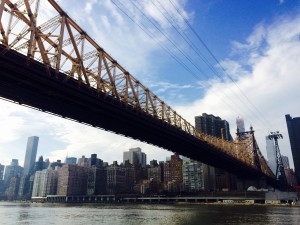
Where we are shapes who we areMy family and I returned today from a four-day vacation in New York City, a world far different from Iowa — land of the nod and two-finger wave when you drive by, well, everyone. It’s when we realize where were not meant to be that we become aware of where we are meant to be.

As I craned my neck to catch the tops of buildings towering above, I realized the density of NYC left me feeling emptied, exhausted. I craved space to breathe, a moment free of blaring taxi horns and the pretense of another curt “Excuse me.”

Place has a way of naturally and organically revealing what matters to me. I write to capture my identity as it exists suspended in specific places and times and more importantly, to work through the turbulence of 20-something life.

I travel not to find the iconic landmark or like-worthy “Look where I am!” selfie but to find the vulnerability place inevitably provides. When I travel, I let place make me feel uncomfortable, uncertain, unmoored, and somewhere amid all that un-everything, I gain a stronger sense of where — and who — I am.

Finding comfort in fleeting moments of certainty

There are many things I don’t know. Where I’ll be working or living next month (well, I hope by next month, anyway). Why I can’t remember which section of Des Moines’ skywalk system is closed even though I trek through it four times a week. I don’t even know how to say, “I don’t know,” in Arabic (something that’s more useful than, say, my knowledge of the word for “peach”).

Amid all my post-grad angst and uncertainty, I find unexpected comfort in the things I know — the cerebral and the tangible. Moment to moment, I flip from extreme confidence to paralyzing fear. I capture the whole experience in writing, whether in my journal, here on my blog or on Twitter. There’s something intoxicating, dizzying, about capturing my identity as it exists, suspended in a single moment and mind — knowing I’ll never be there again.

For now, I’ll take a brief break from my uncertainties (for the next 300-some words, that is) and write about the things I know, some more existential than others.

I know all the words to the “Fresh Prince of Bel-Air” theme song, and I’m not talking about the mainstream version. I can rap the extended version, including the verse about sipping orange juice out of a champagne glass. “Ice Ice Baby” is next on my list, and I’ve already got the, “Yo, VIP, let’s kick it,” part down.

I know I’m a writer. Not an aspiring writer. Not a hopeful writer. A writer.

I know I’ll probably never be fluent in Arabic, but I’m going to keep learning it.

Thanks to Amy Poehler and her brilliant memoir, Yes Please, I know saying “no” should be the end of discussion, not the start of negotiation.

Fun fact: I know all the words to Kevin Gnapoor’s rap from “Mean Girls.” Whenever I need a pep talk, I turn to my favorite line: “All you sucka emcees ain’t got nothin’ on me, on my grades, on my lines. You can’t touch Kevin G.”

I know I don’t have to have my life figured out right now.

A thank-you card to 2014

I’ve been writing thank-you cards for three straight days, per my recent birthday (for the record, I am still not sure if I’m “feelin’ 22”) and college graduation. I even contemplated writing them in Arabic, but that plan derailed when I realized I don’t know the word “for.” When I wrote my typical color-coded thank-you card list, I forgot one recipient, both friend and foe. A frenemy, if you will: the year 2014.

Here, then, is my thank-you card to 2014.

Thank you for writer-ly failure.

The idea looked promising enough: issue-focused, in-depth and relevant to the reader. When I put it together, though, the story simply didn’t work. I interviewed more sources, gathered more information, worked and reworked my intro — still, nothing.

Not every piece of writing will work right away, and some, quite frankly, will never work. That’s fine.

Thank you for Arabic grammar.

Here’s my experience of learning Arabic in one sentence: “Here are the rules, but don’t follow them because everything is irregular.” While it takes me nearly five minutes to write the sentence, “Hi, my name is Taylor Soule, and I am from Newton, Iowa,” and while I still can’t hear the difference among the three “th”-like letters in the alphabet, Arabic reminds me to laugh at myself. Often.

After all, it’s tough to feel serious when, “Do you have a large dog or a small dog?” is one of the more deep and meaningful questions in my repertoire.

Thank you for green bean casserole.

I actually hate green bean casserole, but I’m thankful to 2014 for my app development experience. In the course of five months, I worked as user experience designer and project manager for three apps: an event calendar app, an audio Mad Libs app for 4- to 6-year olds and finally, a Midwestern recipe app (hence the casserole nod).

Each provided a new user base and more importantly, new niches and voices with which to experiment. I wrote event descriptions, mildly nonsensical five-sentence stories for children and expressed my so-called ‘love’ of bacon.

While I’m glad Googling “tater-tot hotdish” is no longer an integral part of my daily routine, I’m thankful my software development adventure provided a variety of new challenges and niches.

So, 2014, thanks for bad writing. Thanks for illogical grammar and letters that sound exactly the same in my English-speaking mind. Thanks for green bean casserole meatballs (they’re a real thing, I swear) and beer-candied bacon. Well, the recipes, anyway.

I’ve learned more this year than any other. Maasalaama, 2014 (that means goodbye in Arabic).

Bits and Pieces

Between learning Arabic, fearing/eagerly awaiting the ‘real world’ and writing my 40-page thesis on pro tennis players’ memoirs, my final semester provided plenty of blog fodder. When I completed my final undergraduate obligation today (beyond wearing that ugly gradation cap this weekend), I didn’t know what to say.

I’m not one for grand nuggets of ‘wisdom’ fit for some teenage girl’s Twitter bio. It’s been a mismatched, odd semester, which unexpectedly led me to an idea for my blog. Rather than feign some, “I found myself in college,” rubbish, I compiled a few excerpts of my life-writing endeavors from the last seven semesters, ending with a longer excerpt from my senior thesis project, “Tap.”

I believe writing is a direct reflection of the self as it once existed, suspended in a particular moment in time. As graduation nears, as I both welcome and fret a new “stage” of my life, there’s something particularly natural about the act of reflecting, reminiscing. It’s too easy to craft some syrupy Facebook post about the “bittersweet” experience of leaving the campus community — and fear not, I won’t post a #ThrowbackThursday photo of my move-in day adventures.

I’m into the darker, more violent elements of writing: extracting tangible bits and pieces of me from their computer-archived safe havens, each comfortably nestled in one distinct moment.

* * *

Spring 2012 (apparently, I was at the pinnacle of my em-dash phase at the time of this piece): Therapeutic texts push readers — like writers — into tender territory, again forcing trauma recollection and restructuring.  Ultimately, therapeutic writing meshes personal and social purpose, benefiting — and even transforming — reader and writer alike.

* * *

May 2013: As my adult life looms, I feel I should rely less and less on outside emotional help, so I do it all on my own; I know it’s not realistic. Now, I realize the value of outside emotional help, but I am still hesitant to admit that I need it.

* * *

December 2014, senior thesis: It strikes me as funny that tennis’ healing power is no longer limited to the court for me. Today, it encompasses the court, television, tweets and most importantly, the keyboard on which my fingers flutter right now. When I read and write about tennis, my player, writer, fan and coach identities converge harmoniously on the page, making the game more beautiful than ever. It’s funny to me, too, that a game I guarded, locked in the privacy of my mind, materializes naturally on the page. Maybe, watching the game and capturing it in writing are my personal means of expressing everything I couldn’t when I only experienced it on the court. I rarely play now, yet I experience the game more deeply, as it weaves a path through my myriad interests, disciplines and habits.  

I took up tennis at 15, late even by the standards of the Midwest, where it simply isn’t a lifestyle like it is on the coasts. I’ll begin with the end of the court’s reign as the cathartic place in my life. When I arrived at Drake University, I was determined to continue playing tennis. In part, I enjoy playing and wanted to stay in shape (and the Hubbell Dining Hall sugar cookies were a dangerous force in my life from the outset of my illustrious college career). In another part, though, tennis was ingrained in my identity and provided a go-to — and almost too easy — means of relieving whatever so-called trauma struck me that day. Tripped up the stairs (again)? Hit the hell out of a bucket of tennis balls, and I promise you’ll feel better for a little while. But I quickly realized time on the court relieved only the initial hurt of my problems, some far more concerning than flailing up the stairs in front of, say, the ‘love of my life.’ Then, as the demands of schoolwork and adjusting to college cut into my nightly serving ritual and tennis time, I felt lost, unsure where to turn. Eventually, with the help of Twitter, I realized my passion for tennis writing and expanded my earlier definition of healing through sport. I began following more and more tennis players and even live-tweeting matches. Yeah, a bulk of my tweets read something like, “Roger Federer is the man and/or a divine being and/or the greatest,” (and so on), but in those teenage-Taylor Twitter binges (“rants” feels a bit harsh, I think), I discovered a new dimension of the game and the healing it provided me.

With the help of my favorite players’ post-match interviews and their books (I once impressed the guy I liked by lending him my copy of You Cannot Be Serious — literary classic, people — by John McEnroe), I began to form my own connections between tennis and life. Connections I realized didn’t require a pristine court, a certain color of tennis skirt or some fancy trophy. Per my generally un-athletic background (I was assigned to the outfield in first grade T-ball — the ultimate form of rejection), I never planned or expected to become some collegiate tennis star. But I never thought I would stop playing, assuming that if I did, I would relinquish a key part of my identity. In high school, I was known as the girl who liked to play tennis and was somewhat decent at it. Without the physical act of striking forehand after forehand and grumbling, “Why can’t you hit anything in today?” I didn’t know what would become of me. The physical and psychological felt inextricably intertwined; without one, the other would cease to exist.

Though I haven’t forgotten the proper way to hit a forehand, a backhand or serve with my trademark degree of mediocrity (even with all that revenge-fueled practice, I never could figure out the whole power-serve thing), I seldom play tennis anymore. And I’m fine with it. Thanks to a fuller portrait of tennis beyond the physical match, and a better sense of identity that inevitably comes with experience, I can continue to engage its cathartic capacity as I type away, reconstructing other players’ game and life narratives. Amid that process, I’m constructing my own.