Tag Archives: life writing

On blank pages, bookshelves and writerly confidence

Blank pages comfort me. It’s something I never thought I’d say. The pressure of college deadlines erased the freedom of blank pages for a few years, paragraphs often sheared or stretched, tweaked or tortured to fit the word count, the required structure — something.

Since graduating, I’ve found renewed writerly peace, strangely, in blank and inked pages alike, each providing a sense of comfort etched at opposite ends of the innovation spectrum. Earlier this week, I had the afternoon off work, so I spent it at Ephemera, my favorite stationery store in Des Moines’ East Village, and Central Library.

The stationery store is a source of confidence, each blank postcard quietly calling, “Hey there, Writer. You’ve got things to say. Say them!” An assortment of empty cards and notebooks form a wobbly stack atop my bookshelf, their empty pages a reminder that there is always, thankfully, something to say.

That premise can, of course, be dangerous, which is where the library comes in. It’s appropriate that the books are enclosed in a semi-transparent, gold façade, the reflective panels inviting me while lending the building an intimidating grandeur. The library is a polite reminder that it’s OK to have confidence as a writer, but it’s equally important to read, to inhabit others’ stories and selves, shaping my own in the forver-humbling process.

My apartment, fittingly, is almost exactly halfway between the stationery boutique and the library. Every day, I strive for writing that strikes a balance between inspiration from the memoirists and autobiographers whose books are permanently anchored below the cup of tea on my coffee table (don’t worry, there’s a coaster) and the blank pages perched a tad greedily on the shelf, each giving me an overzealous writerly pep talk.

Somewhere in the middle, as I teeter between caution and confidence, the page transforms from blank to black and white.

On narcissism, running away and remembering Aylan

I ran to run away in the beginning. If I ran fast enough, far enough, my body would somehow trick my brain into running away from the grueling cycle of dwelling. It’s a tendency I’m both thankful for and hateful of, one that produces thoughtful reflection — reflection that sometimes gets too meta, dissecting text messages and conversation fragments like fodder for my next literary analysis.

When I run in the evening, the day’s events clutter my brain; I think about me, my life, my current existential crisis.

Mornings, for me, are the sacred hour of solace, before the dwelling strikes. Then, my Twitter feed is filled with Turkish news, transporting me around the world for a fleeting bit. I focus on the overwhelming, often heartbreaking news in a country and region I miss every day. Unclouded by to-do lists, thoughts of the next day’s work, my morning brain is more rational and in the moment, maybe.

As I embarked on my first-ever 5:30 a.m. run — a big milestone per my lifelong reluctance to exercise early — I consciously awaited the inevitable descent into dwelling, the ramshackle, narcissistic corner of my mind defined by teenage-Taylor logic and nagging self-pity. This morning, though, I opted to focus on one thing, one story — a story not my own: I thought about Aylan, the drowned Syrian toddler who washed up on a Turkish beach. About the pain I feel every time I hear human beings reduced to the word “migrant,” as if their names are inconsequential in light of their unjustly criminalized transience. About Turkey, a country I love, increasingly marred by violence and soul-crushing news.

At the top of the hill, when I snapped a picture of my own world at dawn, my mind and body felt removed from my here and now, from the ever-coveted “in the moment.” The thing I had chased throughout months of training felt hollow to the core.

In running away, I finally found a new “in the moment,” one that isn’t defined by the physical environment or by my latest personal crisis but by the willingness to set my world aside for a little bit, to snap the picture and enjoy the sunrise, but make a conscious attempt to emotionally inhabit another place. Today, that place is Turkey, a country that fascinates, beguiles and frustrates me all at once; today, I think of Aylan, his mother and 5-year-old brother, a family destroyed by senseless policies in a country I love. Read about him. He matters, his name matters and it is not “migrant boy.”

My childish understanding of “running away” feels different now, rash in its swift assumption of what it means to be caught in a grueling cycle.

On running, shoelaces and fitful rumination

I ran to heal, I claimed. It was a neat, tidy motivation, one I could tuck in my mind like I tuck my key in my shoelace. Committing to the half marathon would help me get over a failed relationship while providing a new milestone, something flashy to cloak raging feelings of inadequacy, something shiny to brandish when asked, “What’s new?”

Running is the constant, physical manifestation of moving forward, I theorized; therefore, my mind and emotions would follow the same progressive path. When I crossed the finish line in October, I would be healed.

But in the tired delirium of being trapped in my brain for up to three hours over 13-some miles of pavement, I found myself anchored not to the glittery, “What’s new?”-worthy future but to the past. I ran forward, reciting entire conversations in my mind, the ones I deleted from my phone but couldn’t erase from memory, the impact of my shoes creating a disjointed beat; I slid into madness even as I made physical progress.

During the particularly tough mileage days, I found myself breathlessly mumbling strings of jumbled sentences, something like, “You can do it, three more miles, I hate you, why couldn’t you have kept me around, there might be a bug in my eye, don’t say things you don’t mean, don’t say you want to stay friends, why the hell did you register for the half.”

As the training runs have stretched on, I’ve learned to dedicate each mile to one thought, idea or regret, throwing my whole body and mind into its fitful rumination, contemplation and eventually, meaningful reflection.

Sometimes I even manage to sneak in an A-ha! moment or epiphany — something new to tuck in my shoelace.

On personal branding, writers’ workshops and being brave

I was really good at being good. Maybe the best. I wrote happy stories about happy things like parades and sisterhood. I was high school valedictorian. I was really good for too long.

Then I discovered life writing, where hurt thrives on the page in raw, reflective clarity, where I felt empowered, finally, to screw up. Feeling empowered to fail is an off-putting concept, one I resisted for a long time.

The life writers I admired told me about the ways they screwed up. At 14, Phoebe Gloeckner had sex with her mother’s boyfriend. Kathryn Harrison had a years-long love affair with her father. Anne Lamott was an alcoholic and a drug addict. They screwed up, they wrote about it and life continued; it amazed me.

I slowly found an unnerving sense of power in writing about the ways I’ve failed. I wrote about how I’ve never had a boyfriend and feel I’ve failed my family for it. I wrote about the semester of college I spent drinking cheap wine and whiskey in a sorry effort to cope with a beloved professor’s death and falling illogically, irreversibly hard for a charming European guy on a study-abroad trip. I wrote about the times in college I drunkenly made out with guys I didn’t like that much.

Life writing gave me a space to learn from my mistakes without fear of judgment, without the pretense of some syrupy-sweet ‘personal brand,’ where the good, work-appropriate you falsely presents itself as the whole you.

It was in the sacred circle of undergrad writers’ workshops that I learned I could be the whole of myself, I could write about it and I could share it with strangers. There is a writerly camaraderie and maybe, a sense of bravery, those workshops instilled in me, a bravery I’ve struggled to replicate without them.

The view from my rooftop at 5:30 a.m.

The view from my rooftop at 5:30 a.m.

Though I no longer have access to the collegiate circle of writers, one I miss and crave, I’ve realized that reading life writing is a kind of workshop all its own, one I can participate in at 6-something in the morning on my rooftop, 15 stories up, or on my couch on a rainy day.

Phoebe Gloeckner, Kathryn Harrison, Anne Lamott, Cheryl Strayed, Elif Shafak … They all inspire in me that familiar wisp of bravery. I’ve replaced being really good with being a little bit braver. It’s scary to write openly about all the stupid 20-something stunts I’ve pulled, but I think it’s one step in moving toward a personal brand defined not solely by my job or professional skills but by authenticity and a commitment to the whole me.

On fear, frosting and rewriting my story

My fear has grown up with me. At times it is 13-year-old Taylor at the eighth-grade scary-movie sleepover, then the emblem of rebellion, with “The Silence of the Lambs” playing. My bowl of M&M’s is scattered across the shag carpet in my friend Katie’s basement. I sketch invisible lines from candy to candy, weaving my own invisible safety net. It’s funny how fear guides me to chaotic sources of comfort and order.

At times my fear is overdramatic and older than its age. I fret about ‘missed’ milestones and milestones that are years in the future; whether or not I’ll ever get married, funding my dream trip to the Istanbul Open, saving enough for retirement. Meanwhile, I sit here eating graham crackers caked with neon-yellow frosting (OK, so I haven’t mastered the whole wise-beyond-my-years thing yet).

Lately I’ve confronted and engaged fear in a variety of ways, through the goal of doing one thing a month that scares me.

I’m volunteering for the presidential campaign I support. I’m mentoring high school sophomores and juniors with the Greater Des Moines Partnership’s Youth Leadership Initiative. I’m training for my first half-marathon.

All three terrify me in different ways, ways that weave together the complexities of fear, fear that lurks in half-empty tubs of Pillsbury frosting, spilled M&M’s and lingering disbelief.

In writing-major tradition, I debated between “disbelief” and “unbelief” in the above sentence for 10 minutes, followed by my four-mile evening run. Though they’re technically synonyms, I clung to one word in the definition of “disbelief.”

According to my dictionary app, “disbelief” is the “lack of faith in something,” whereas “unbelief” is “an absence of faith.” I like the word “lack.” It suggests not the complete absence of faith but a persistent deficiency, something I can replenish with reflection and writing.

Before I write anything about my life, I read a minimum of one chapter from a memoir or autobiography by a female writer. The other day, this newfound ritual led me to the perfect quote, one I still can’t get out of my head: “Fear, to a great extent, is born of a story we tell ourselves.” I am not hiking the Pacific Crest Trail like Cheryl Strayed in Wild; I am, however, a compilation of my own stories, and I’m consciously working to rewrite them.

I have a new invisible safety net, one found not in spilled M&M’s but in sentences, each period, exclamation point and question mark serving as the next destination in an ideological, identity-forming connect-the-dots.

On slide projectors and longing for elsewhere

Travel memories work like an old-fashioned slide projector. They hum, the crunching gears cruelly reminding me I’m no longer elsewhere. Eventually, I fade into the memory once again, and the humming fades with it; I’m elsewhere for that fleeting moment. Then, click, I’m jolted to the next memory, forever too soon.

In college I traveled regularly, reveling in the fear, glee, confusion, angst and self-awareness it inevitably offers. Without the flexibility of traveling in my post-grad life, I’ve found my gaze lingering on photos of Istanbul, Izmir, New York, New Orleans (and more), bummed I can’t remember every little detail like I promised my mesmerized college self I would.

Izmir, TurkeyRather than ogle at my painting-like Izmir album any longer, I returned to the root of my fascination with world traveling, one I hope to realize.

My sixth-grade teacher, Mr. Stone, broke out his slide projector only on the most special days, days reserved for faraway places and more importantly, ditching the cliché rubbish of your typical world culture textbook.

With each wheezing journey of the projector, we visited Japan, China, Russia, Africa through his travels, each slide lingering long enough to provide a tiny twinge of longing, a silent “Wait!” when the “click” sounded, ushering me into a new elsewhere. I hadn’t had time to process every pixel of the previous photo, after all!

Memories operate like the beloved, resilient slide projector, I learned when I fell off my couch the other day. While trying to find the perfect angle for my new frame featuring the Izmir, Turkey, skyline, I had plenty of time to take in the photo, to relive the memory in its fullness. That’s what I thought, anyway.

After nearly 10 minutes of juggling the frame and my level with ever-poor balance, it bothered me that I couldn’t remember every detail of that experience — how we got to that lookout area, what kind of flowers bloomed there, even the name of it.

Then I realized it’s OK to not remember every detail because when I stop worrying about the natural fading of tangible memories, I find it’s easier to re-experience the beautiful feeling of wandering, wherever I am.

On tennis, existential crises and unglamorous epiphanies

My lemon-lime-colored fuzzy blanket shields me from the sight of Roger Federer losing. When he’s winning, I wear it like a cape and pace the room, my mug of tea inevitably dripping to the carpet below.

Watching tennis with me is a lively, theatrical experience. A spectacle of erratic emotion, really.

Yet it’s in that nerve-wracking, can’t-sit-still display I find brief moments of contentedness. And by “contentedness,” I mean my prone-to-existential-crises side fades for a moment, giving me a little break from the pressure that’s integral to the female experience, I think.

I like tennis for its innate starkness (and Grigor Dimitrov, let’s be real here). Without the trouble of watching two teams in dizzying motion, I can focus on one player, the precise movements that comprise the perfect hit. Every tiny element is detectable, vital, never hidden behind the other player. It is innately enough.

Distilling the game down to each stroke suspends me in the present, reminding me to commit my energy here, to the immediate and attainable.

A beautiful dichotomy emerges, in which each shot guides me to something tangible in life.

Drop your left hand level with your hip when you hit; be still for five minutes and reflect. Angle your volley; right now, remind yourself it’s fine to feel “happy, free, confused and lonely at the same time” (my girl T. Swift gets it).

As I imagine little adjustments echoing in my favorite player’s mind, I confront my own, replacing full-blown existential crises with manageable moments of positive change.

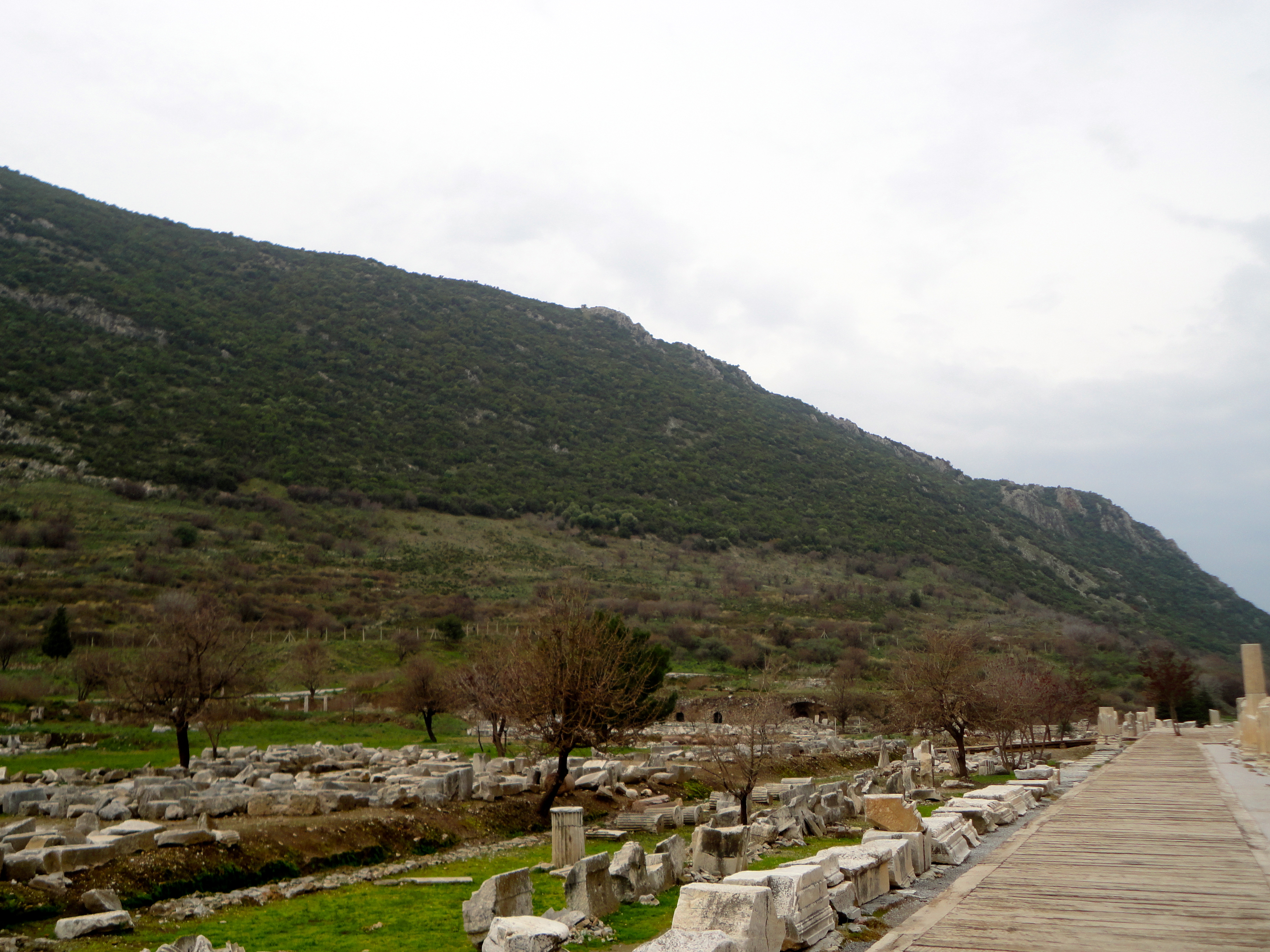
But as long as I'm thinking/writing/rambling about exotic travel destinations, please enjoy this photo of my all-time favorite ancient ruins at Ephesus in Turkey.

But as long as I’m thinking/writing/rambling about exotic travel destinations, please enjoy this photo of my all-time favorite ancient ruins at Ephesus in Turkey.

Per my recent envy of college classmates who got their degrees and promptly jetted off to Europe or some equally cool other continent, I often forget I don’t need a plane ticket or exotic destination to arrive at something worthwhile/life-changing.

Sometimes the important epiphanies happen in a still-blank-walled apartment at 4:36 a.m., wrapped in a blindingly neon fuzzy blanket.

On reflection, intention and sitting still

Intention: It manifests tangibly in my everyday world. The stack of library books perched on my coffee table in the order I’ll read them. My prioritized, color-coded to-do list. The growing nest of Command strips, nails, hooks and tools on the counter, each a promise to my blindingly blank walls that they’ll one day house the “grown-up girl” art I claimed I’d buy after college.

Even my well-intentioned world of cryptic, multilevel to-do lists is its own illusion. Intention, I realized recently, is about more than checking items off my list or adding a new interview-worthy skill to my resume every few months; it’s about deliberate efforts to break old habits and, for me, returning to a few really ugly moments.

I’ve only recently found the gumption to reflect on the semester of college I spent binge-drinking cheap, terrible booze (example: my roommates and I had practically every flavor of UV vodka emptied atop our kitchen cabinets as decoration … decoration). My lone intention that semester was to feel as little as possible. I felt bad for feeling bad about something that my logical side said shouldn’t have broken me like it did. I felt lost after a beloved professor’s sudden death.

(If you derive one nugget of wisdom from this post, let it be this: UV lemonade is the awful, 21-plus version of errant bug spray floating into your mouth before that summer trip to the lake.) Back to the constructive commentary.

I’m rethinking intention through a series of daily changes. Rather than wandering the Internet each morning in search of the answer to some existential question (i.e. “Which Taylor Swift ‘1989’ music video are you?”), I’ve started reading one chapter of a memoir or autobiography (I recommend Anne Lamott’s Traveling Mercies). There’s something about peering into someone else’s soul at 5:34 a.m. that invites me, gently, to examine my own.

I noticed the stark, beautiful contrast of these streetlights in a moment of stillness on one of my evening walks.

I noticed the stark, beautiful contrast of these streetlights in a moment of stillness on one of my evening walks.

After I finish that chapter, I force myself to be still for five minutes. Before the commotion of my pre-6 a.m. playlist, before my morning ritual of emptying my entire jewelry box to find the necklace that best complements my (probably) black outfit, I’m slowly finding it more natural to confront my fears in a positive, focused manner.

In the spirit of intention, I’ve embraced the idea that you should like what you damn well like, and it doesn’t matter if anyone else thinks it’s hip. Recently at an outing with a friend, I was amid one of my usual, “I love tennis! I love Arabic! I love dinosaurs! I kick ass at Centipede!” flail fests, and I realized it’s cool to be passionate about a lot of things.

With it, the tangibility of intention has faded in my life. Yeah, I still enjoy the satisfaction of checking another task off my to-do list, but I find myself feeling most productive and purposeful, bizarrely, when it’s 5-something in the morning and two minutes remain of my “Taylor, sit still” time. It’s in those ticking 120 seconds that I feel a little bit more like the intentional, mindful grown-up girl I hope to be.

Why I like diagramming sentences

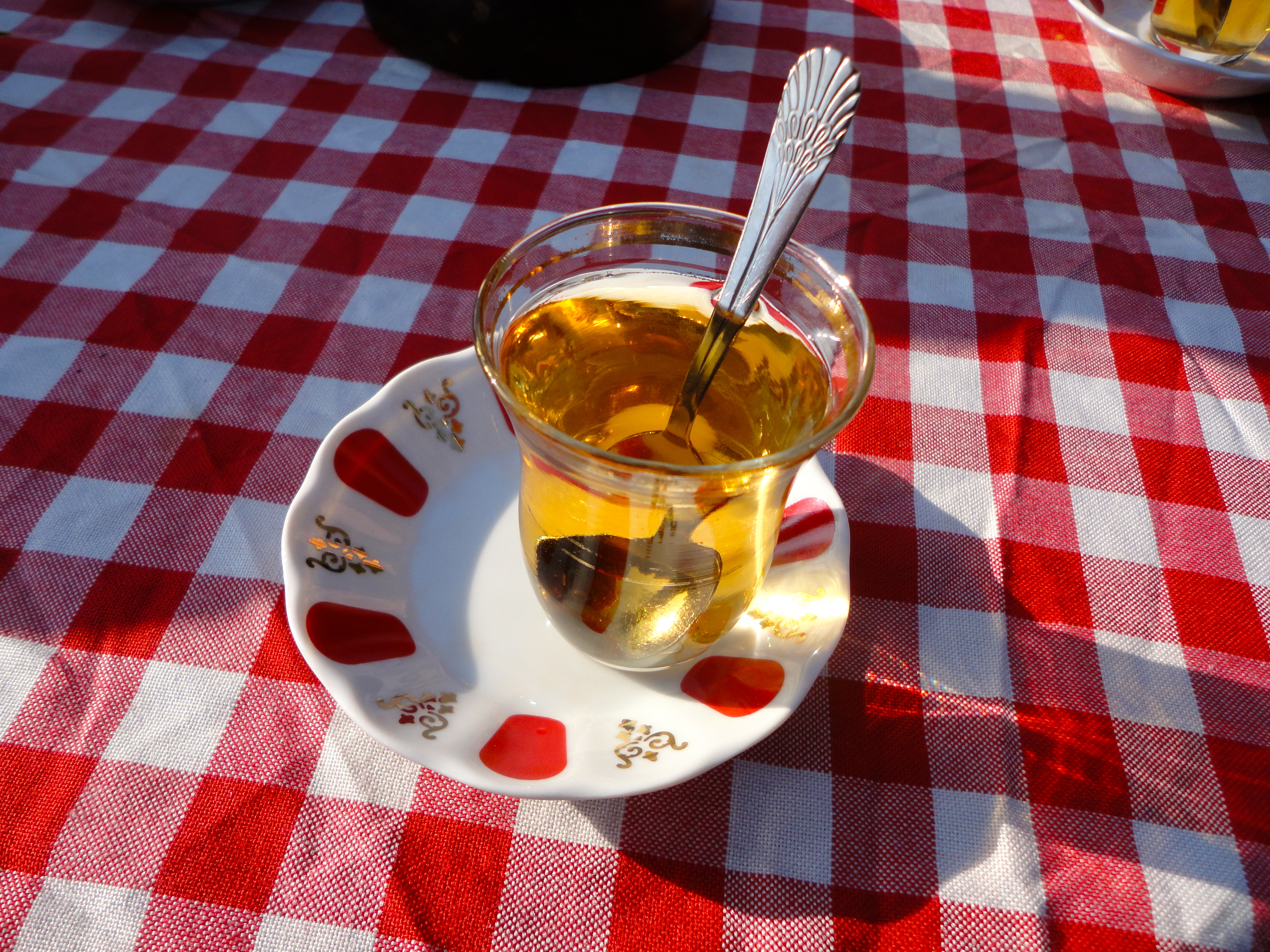
Errant droplets of tea create a path in my apartment, clinging to the lip of my favorite owl mug until they fall. When I can’t make sense of my life, I pour a mug of tea and pace.

Sometimes as I pace, I find myself trying to strip pivotal conversations of their emotional value; break them down into something formulaic, impersonal. An unexpected application of my English degree.

A few days ago I found myself dwelling on the end of a relationship, rereading old text messages as I admit I’m prone to do. Rather than succumb to the usual, toxic practice of pinpointing specific places I could have been funnier/wittier/smarter/etc., I began diagramming and labeling the verbs in my mind. Intransitive, monotransitive, ditransitive, copula, complex transitive. I plotted the form of each sentence, using colored text, italics and returns to reimagine my pain as a pattern, one I can plot, map and organize.

The terminology I once feared has become not an academic tool, a means of getting an A on the next essay, but a means for visualizing disappointment — proof that my pain exists in tangible, color-codable clarity.

I’m no longer worried about how I could have been funnier/wittier/smarter/etc. I was and am a complete being; my writing, whether it’s a text, tweet, press release or letter, reveals my pattern of thinking, feeling, being.

Tangibly mapping language is proof that my feelings and pain are real — that I’m real. Proof that order can exist amid erratic emotions and hurt that resurfaces when unexpected.

Each familiar sentence form and unconsciously recurring verb form are proof that the only thing I ever am — and will ever be — is authentically, innately me.

The girl who should probably buy a coaster for each piece in her mug collection, regularly spills her tea and diagrams sentences in her free time.

On running, dwelling and why I’m over “getting over” it

Running and dwelling: I’ve been meditating on the two lately; a strange pair they are. When I run — the physical embodiment of moving forward in pursuit of that faraway goal of the Des Moines Half Marathon in October — I find myself dwelling, immobilized by unmoored thoughts rooted in what was.

I remember the European boy who was mean to me on a 2014 study abroad trip. How I swooned over the two-and-then-some languages he spoke; how he admired my English vocabulary and the obscure words that wind their way into everyday chatter.

I think of the semester of college I spent binge drinking cheap, terrible booze, completely paralyzed by the incident and unable to cope in positive manner.

Arabic NotebookI relive the time a textbook taught my Arabic class to use the same word for “friend” and “boyfriend,” and I spent an entire week introducing every guy in class as my boyfriend. The dwelling isn’t entirely founded in negative experiences or memories.

This blog emerged on a run, sentences punctuated by moments of breathlessness, some fueled by the exertion, some by the painful memories themselves, I think.

There’s a certain preoccupation with “getting over” things, one that doesn’t give us permission to work through anything on our own timeline.

For me, there is often an extended period of intense, well, ranting. I’m talking swear-word laden, repetitive, teenage-Taylor-worthy rubbish. But every once in a while I find a valuable nugget of wisdom or useful sentence amid that rubbish, something that later leads to a blog post, an essay or simply a day-to-day epiphany.

When I run, I dwell; when I find myself dwelling on something, I run. Maybe it’s dangerous to simulate a sense of progress by physically moving forward while I return to some ‘traumatic’ experience that then felt like the collapse of my proverbial universe. But maybe running is the safe space in which I’m free to ruminate, replay and relive the painful. And when I regain my breath, I often find that I’ve gained perspective.

I’m over “getting over it.” I’m the one running through it.